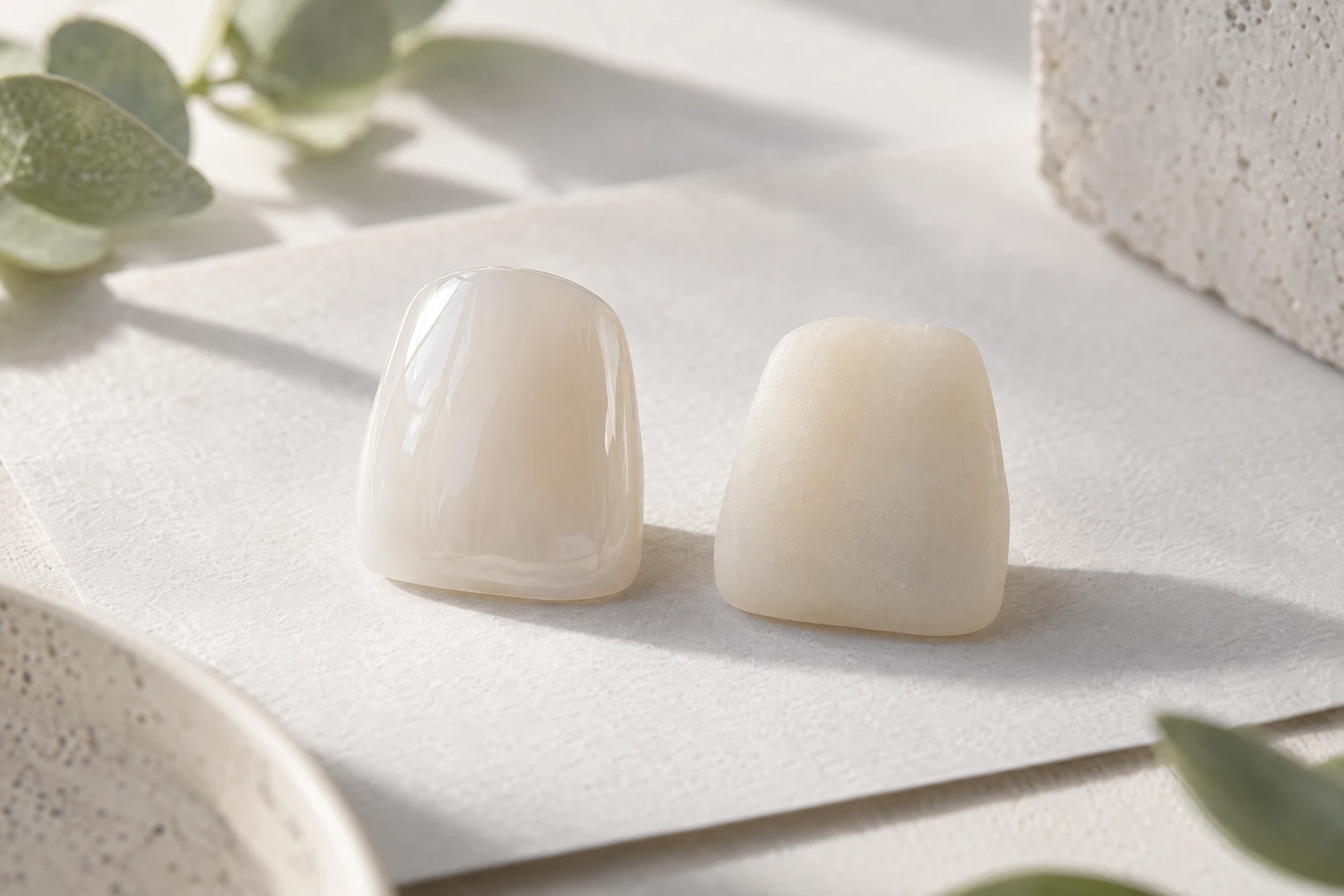
Composite bonding and porcelain veneers can both change the visible front surface of a tooth, but they make different compromises. Composite is usually an additive, repair-friendly approach for smaller changes; a porcelain veneer is a custom-made thin facing that may offer stable aesthetics over time but can require enamel removal and a longer-term commitment to maintenance or replacement. The right option depends on the tooth, bite, gum health, existing restorations and the size of change sought—not on a material label alone.
What to keep in view
- Composite bonding is usually a direct, additive resin technique suited to smaller repairs or shape changes; porcelain veneers are custom-made facings that cover the front surface of a tooth. The amount of tooth alteration depends on the individual design.
- Porcelain veneers may need a small amount of enamel removal, although preparation needs vary and some veneers may be no-prep. If enamel is removed, the decision is irreversible; this is a central conservation trade-off.
- Aesthetics are not a simple material contest: both can look natural. Porcelain generally has better stain resistance, while composite may need periodic polishing, refurbishment or repair for surface stain, wear or local defects.
- Composite is often more straightforward to add to or repair locally. Porcelain can sometimes be repaired after a small chip, but breakage or other problems may require replacement. Repair suitability depends on the size and cause of the defect.
- Wear, clenching/grinding, decay, gum health, enamel available for bonding, the existing bite and the extent of the proposed cosmetic change should be assessed before choosing. Do not treat published longevity figures as a guarantee for an individual tooth.
- For an elective cosmetic choice, ask for time to consider a written plan that sets out alternatives, material-specific risks and benefits, maintenance, expected longevity, costs and what would happen if the restoration fails; this reflects General Dental Council consent standards.
- The evidence base has limits: a Cochrane review found no eligible randomised trials comparing repair with replacement of defective composite restorations in adults. ‘Repairable’ describes a possible conservative management route, not a promise that every composite problem can be repaired.
Five patient questions
Clear answers, with the context that matters.
01What is the practical difference between composite bonding and a porcelain veneer?+
Composite bonding usually means tooth-coloured resin is placed, shaped and polished directly on the tooth; it is commonly used for smaller chips, gaps or contour changes and can often be completed in one visit. A porcelain veneer is a thin, laboratory-made facing bonded over the front of a tooth, normally over at least two visits. Veneers cover the full front surface, whereas bonding is often more localised. Both can improve colour, shape or minor alignment, but they are not interchangeable treatments.
For your own situation: This is general information: whether a small additive repair, a veneer, orthodontics, whitening or no treatment is appropriate needs an examination of your teeth, gums, bite and photographs/radiographs where indicated.
02Which option conserves more of my natural tooth?+
For a modest change, direct composite is commonly an additive strategy, so it may preserve more natural tooth structure. Porcelain veneers can be very thin and some designs need little or no preparation, but fitting some veneers involves removing a small amount of the outer enamel; once enamel has been removed, that change is not reversible. Conservation therefore depends on the planned shape, position and colour change—not simply on whether the treatment is called a veneer.
For your own situation: Only an examination and a proposed design can show whether preparation is needed in your case and how much enamel, if any, would be altered; ask the clinician to explain this before consenting.
03Will porcelain look better, and will composite stain?+
Both materials can be made to look natural when colour, shape and finish are planned carefully. Porcelain allows a precise selected shade and professional guidance says it generally resists stains better than composite. Composite can pick up external stain at its surface or margins over time; polishing or refurbishment can often improve superficial staining, while more deeply penetrating stain may require replacement. Natural teeth also change colour, so matching a restoration is a planning issue whichever material is chosen.
For your own situation: No material guarantees a particular cosmetic result. Your clinician needs to assess your starting tooth colour, any existing whitening, gum display, the number of teeth involved and your expectations in person.
04If it chips, wears or discolours, can it be repaired?+
A local defect in composite can often be polished, resurfaced or repaired by adding composite, which can avoid removing the whole restoration when clinically suitable. That is a real practical advantage, but it is not a guarantee: heavy stain, extensive fracture, decay or an underlying bite problem may call for a different treatment. Porcelain veneers can chip or break too; small chips may sometimes be repaired, but a new veneer may be needed. A systematic review of porcelain laminate veneers estimated 95.5% 10-year survival in the included clinical studies, with fracture the most common complication—useful context, not a personal prediction.
For your own situation: Whether a defect is safely repairable requires an examination to check the restoration, tooth, margins and cause of failure; the evidence on repair versus replacement of composite restorations also has important limitations.
05How do I decide if composite bonding or porcelain is the wiser long-term choice?+
Start with the smallest treatment that reliably meets the clinical and aesthetic goal. Discuss the desired change, whether healthy enamel must be altered, expected maintenance, stain and wear risk, repair/replacement options, and the consequences of doing nothing or choosing alternatives. Decay, active gum disease, insufficient enamel, a heavily broken-down tooth and clenching/grinding can change the recommendation; porcelain veneers are not suitable for everyone. In England, veneers are generally private unless there is a clinical need, so a written plan should also distinguish clinical necessity from elective cosmetic work.
For your own situation: A dentist must examine your mouth and bite before advising; ask for personalised alternatives, material-specific risks, expected maintenance, costs and what happens if treatment fails. UK standards require a consent discussion tailored to the patient, including options, risks, benefits, prognosis and cost.
Clinical & regulatory sources
Explore the source material.
These sources informed this guide. They support general education and do not replace an examination or personalised advice.
Take this guide into a consultation and ask how the information applies to your teeth, gums, bite and goals.
Open the consultation guide ↗