Clear treatment guidance
Porcelain veneers explained.
Porcelain veneers can make a subtle or significant visual change. The best decision begins with an honest, unhurried view of the teeth you have now.
What a veneer is
A thin ceramic restoration, designed around the tooth beneath it.
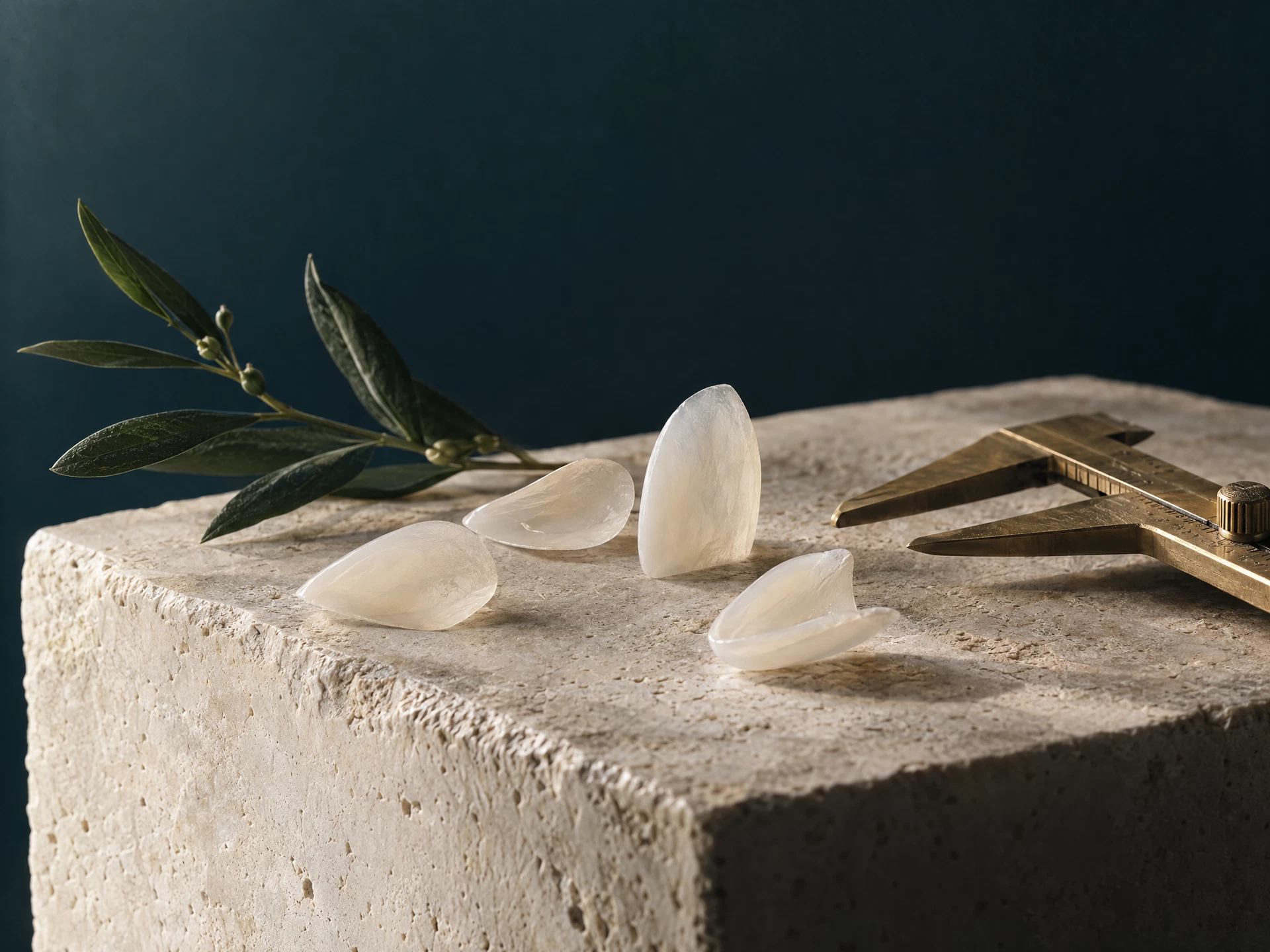
Porcelain veneers are custom-made ceramic shells bonded to the front surface of a tooth. They may be considered to alter colour, length, shape, proportion or the visual alignment of one tooth or a group of teeth. Their success depends on the strength and health of the tooth they sit on, as much as the ceramic itself.
They are not automatically the least invasive answer, the whitest answer or the right answer for every smile. A good plan makes room for all three of those possibilities.
Suitability
Who porcelain veneers may suit — and when to pause.
They may be considered when
- Teeth and gums are stable and disease-free.
- Colour, small chips, wear, minor spacing or proportion are the primary concern.
- You can commit to maintenance, review and appropriate protection.
- The planned change can be achieved without overextending the ceramic.
A different route may be better when
- There is active decay, gum disease or unresolved sensitivity.
- Significant crowding or bite discrepancies would drive excessive tooth reduction.
- Grinding or heavy function is unmanaged.
- A crown, orthodontics, whitening or additive bonding would preserve more tooth tissue.
Preparation
Preparation should be purposeful.
Some veneer plans require a small amount of enamel preparation to create room for ceramic, manage an edge or prevent a restoration from looking bulky. Others can be largely additive. The amount should be explained tooth by tooth, with the reason for it and the alternatives.
Ask to see how preparation, bite and the proposed final contour relate to one another. A plan is easier to trust when its compromises are visible.
Smile design
Shade is only one part of a convincing result.
Proportion
Length, width, line angles and the relationship between adjacent teeth influence whether a change feels calm or conspicuous.
Light
Porcelain can be layered to manage translucency, brightness and the way the edge reads in daylight.
Surface
Fine texture, value shifts and a degree of asymmetry help a restoration sit naturally beside enamel.
Context
Lips, skin tone, age, facial proportions and the visible natural teeth are all part of the final colour decision.
Decide with detail
A more considered first conversation.
Take the questions, references and practical notes that matter to a consultation. A good plan should meet your dental health, your design brief and your long-term comfort.
Consultation guide ↗