Porcelain veneers are not simply ‘fitted’ in one moment: a safe result depends on assessment, planning, accurate records, laboratory work and a carefully controlled bonding appointment. For many straightforward cases, the preparation/record-taking visit and final fitting are about two weeks apart, but a London patient should allow for extra planning, design or review visits where the clinical situation or desired change calls for them.
What to keep in view
- A veneer is a thin restoration covering the front surface of a tooth; it usually involves some tooth-structure removal, though the amount is highly case-specific.
- A practical conventional pathway, once treatment is agreed, is preparation plus an impression/scan, laboratory fabrication, then final fitting around two weeks later; additional planning or review visits are normal where needed.
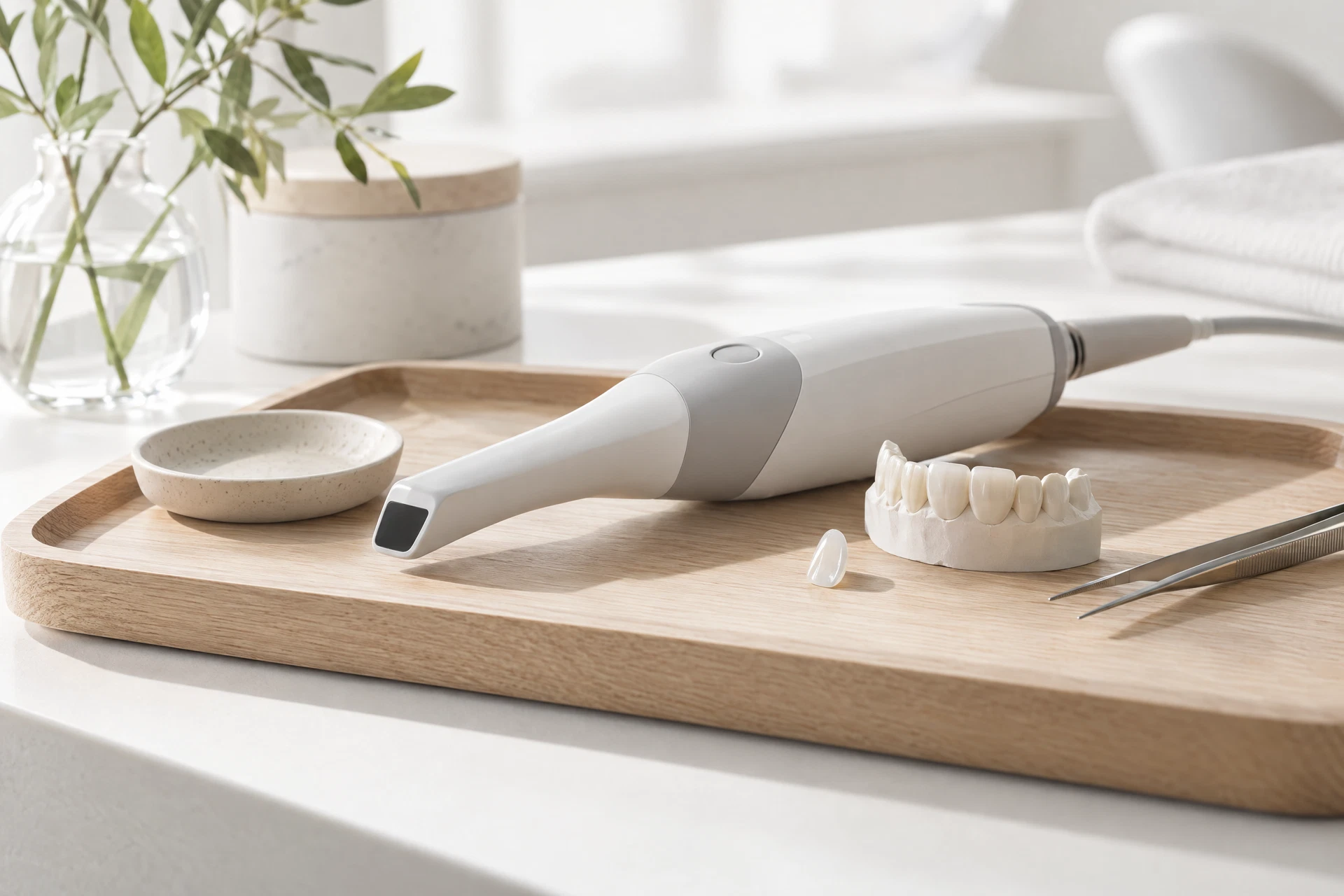
- Digital intraoral scans are one way of making laboratory records, but good scanning conditions and suitable margins matter; a conventional impression may still be chosen.
- A provisional restoration may be used during the laboratory phase, but it is not automatic for every veneer case and should be discussed in advance.
- The pre-bond try-in is the moment to assess seating, margins, shape and shade together before the permanent adhesive procedure begins.
- Bonding needs careful moisture control and material-specific technique. Valid consent is an ongoing process, so patients should be told about alternatives, material risks, expected prognosis, costs and any changes to the plan.
Five patient questions
Clear answers, with the context that matters.
01How many appointments and how long does the veneer process usually take?+
Once the plan is agreed, an NHS hospital guide describes a common two-visit clinical sequence: teeth are reshaped and an impression is sent to the laboratory at the first visit, then the definitive restoration is fitted about two weeks later. In practice, assessment, photographs, X-rays where indicated, smile-design/mock-up discussions, bite management, laboratory capacity or a separate review can add visits. Ask for a written, case-specific sequence rather than relying on a fixed ‘same-week’ promise.
For your own situation: Two visits and ‘two weeks or so’ are a useful conventional guide, not a guarantee. Your dentist can estimate timings only after examining your teeth, gums, bite, existing restorations and the number of veneers, and should give you time to consider options, risks, benefits and cost.
02Will I have a digital scan, or a conventional mould?+
Either may be used to capture the teeth for the laboratory. An intraoral scan is a digital impression, not a substitute for any diagnostic X-rays the dentist considers necessary. A veneer-specific evidence review found digital impressions can be clinically acceptable and can improve comfort and workflow, but good results still depend on a dry field, visible margins, suitable scanner use and clinician experience; conventional impressions remain a valid option.
For your own situation: A scan is not automatically the best choice for every mouth or every margin position. The clinician should decide which records are appropriate after examination, and explain why.
03Will I need temporary veneers while the laboratory makes the porcelain ones?+
Possibly, but not invariably. After a tooth has been prepared, a provisional restoration may be used to protect it and maintain appearance while the laboratory work is being made. Provisional porcelain-veneer techniques and their indications vary; peer-reviewed literature notes that provisionals can be difficult and are sometimes omitted, which is why the decision should be planned rather than assumed. If you receive one, ask what to do if it loosens or breaks and whether you should avoid biting hard foods with it.
For your own situation: Whether a temporary is sensible depends on how much tooth structure is altered, the planned design, your bite, sensitivity, appearance needs and the dentist’s chosen technique. Only your treating clinician can advise on your own interim restoration and care.
04What happens at the try-in before the veneers are bonded?+
The dentist can place the finished ceramic veneers without permanent cement first to check that they seat correctly and to review margins, shape and shade with you. Try-in pastes may be used to help assess how the cement shade could affect the appearance. This is a valuable point to raise concerns before permanent bonding; if fit, shade or design needs more work, the team may need to adjust the plan or involve the laboratory again rather than rushing ahead.
For your own situation: A try-in is an assessment stage, not a promise that every adjustment is possible chairside or that a particular photograph/screen image can be reproduced exactly. The dentist must judge fit, gum health and bite as well as appearance at your examination.
05What should I expect on the final bonding day?+
After the fit and appearance are accepted, bonding is a technique-sensitive clinical procedure. Published protocols describe controlling moisture, often with a dental dam, preparing the inside of the ceramic and the tooth surface, applying resin cement, seating the veneer, removing excess cement and curing it; the bite and finish are then checked. A final appointment for several veneers may therefore take longer than it appears from the outside. The exact materials, isolation method and sequence vary with the ceramic, tooth surface and clinical situation.
For your own situation: Do not treat an online bonding sequence as instructions or as a reason to request a specific material. Adhesive choices and isolation must be selected by the dentist after examination and in line with the restoration and manufacturer instructions.
Clinical & regulatory sources
Explore the source material.
These sources informed this guide. They support general education and do not replace an examination or personalised advice.
Take this guide into a consultation and ask how the information applies to your teeth, gums, bite and goals.
Open the consultation guide ↗