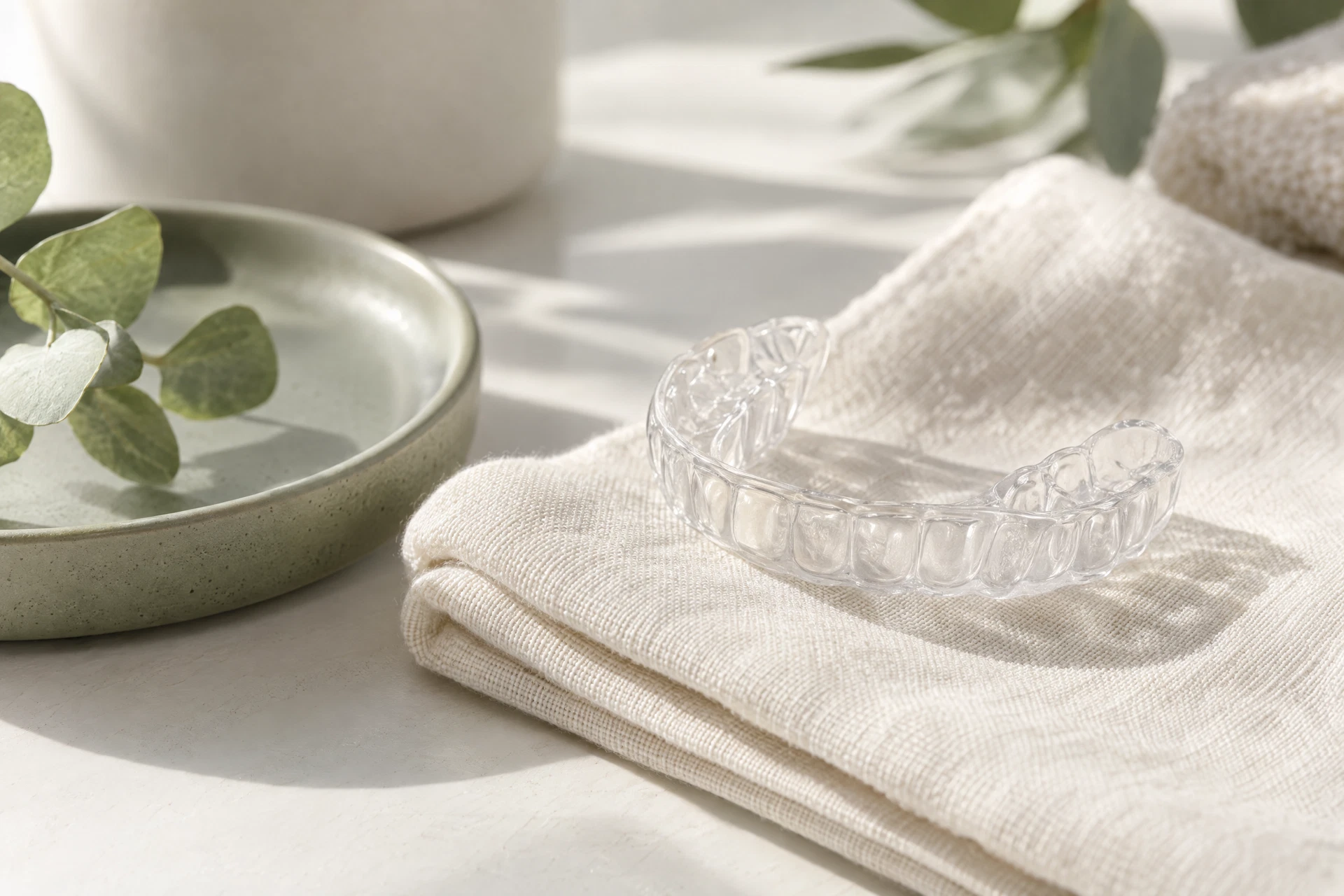
Porcelain veneers can be exposed to substantial forces from clenching and grinding. For someone with tooth wear, a careful pre-treatment assessment should consider the teeth, jaw joints and chewing muscles, as well as possible acid erosion, awake clenching and sleep bruxism. The aim is not to promise that a veneer or splint will eliminate grinding, but to identify modifiable risks, explain the higher maintenance burden and plan protection where clinically appropriate.
What to keep in view
- A veneer consultation for a patient with wear should assess function and risk, not aesthetics alone: teeth, jaw joints and chewing muscles are inter-related.
- Visible wear does not by itself diagnose grinding; acid exposure and other factors can be important and may act together.
- Bruxism is associated with veneer complications in observational evidence, so risk disclosure, design and maintenance planning are particularly important.
- A professionally fitted splint may provide a protective barrier, but evidence does not establish that it reliably stops sleep bruxism or guarantees veneer survival.
- Sensitivity, fractures, progressive shortening of teeth, jaw pain or reported night grinding merit a dental assessment before elective veneer treatment.
Five patient questions
Clear answers, with the context that matters.
01Can I have porcelain veneers if I grind or clench my teeth?+
Grinding or clenching is an important risk factor to assess before veneers, rather than something that can be safely cleared from a questionnaire alone. In one observational clinical study, veneer debonding was more frequent in patients with bruxism, and the authors reported more fractures among bruxism patients who had been advised to use a splint but did not do so. This shows an association and supports careful risk planning; it does not mean every person who clenches will lose a veneer, or that a splint guarantees success.
For your own situation: Personal advice on whether veneers are suitable, their design and any protective appliance requires a dentist to examine your teeth, bite, restorations and pattern of wear.
02What does a bite assessment add before veneer treatment?+
It puts the veneers in the context of how the whole mouth functions. A peer-reviewed British Dental Journal review says a tooth-wear case should consider three linked elements: teeth, temporomandibular joints and chewing muscles; bruxism and temporomandibular disorder symptoms are relevant to management and consent. Assessment of wear also looks for location and severity, and for other contributors such as dietary acid, reflux or vomiting—not simply whether the front teeth meet.
For your own situation: The content and findings of a bite assessment are individual; only an examination can establish whether your bite, jaw symptoms or tooth wear create a material risk for a proposed veneer plan.
03Do worn teeth prove that I am grinding at night?+
No. Tooth wear is cumulative and multifactorial. Acid erosion is a common cause, and diet, reflux or vomiting may contribute alongside grinding or clenching. A 2024 scoping review found the evidence on the association between tooth wear and bruxism inconclusive and specifically cautioned clinicians not to infer bruxism activity from tooth wear alone. A history of symptoms, reported sounds, clinical signs and the pattern of wear all need clinical interpretation.
For your own situation: A dentist must examine you and take an appropriate history to distinguish likely causes of your wear; this information cannot diagnose bruxism for an individual.
04Will a night splint stop grinding and protect my veneers?+
A dentist-made mouth guard or splint is commonly used at night to protect teeth from damage; Leeds Teaching Hospitals notes that a splint can help protect teeth from wear or fracture and may help bruxism-related pain. It should fit properly—poorly fitting splints can cause tooth or gum problems. Importantly, protection is different from curing bruxism: a Cochrane review found insufficient evidence that occlusal splints treat sleep bruxism itself, although they may have a benefit for tooth wear. Splint type, fit and review therefore matter.
For your own situation: Whether you need a splint, which type is safe, and how it should be adjusted after veneers can only be decided after a dental examination and follow-up assessment.
05I only clench in the daytime—does that matter for veneers?+
Yes, awake clenching is relevant because it can add repeated force to teeth and restorations. Leeds Teaching Hospitals describes awake bruxism as a subconscious habit that may improve with practice; its practical advice includes relaxed neck and shoulders, relaxed jaw muscles and keeping the teeth slightly apart when not eating. Sleep and awake bruxism are different patterns, so a night-only appliance may not address daytime habits. New sensitivity, broken teeth or fillings, jaw/face/ear pain, or a partner hearing sleep grinding are reasons to arrange a dental review.
For your own situation: A clinician needs to examine your teeth and jaw and discuss your daily habits before advising on clenching management or predicting its effect on veneers.
Clinical & regulatory sources
Explore the source material.
These sources informed this guide. They support general education and do not replace an examination or personalised advice.
Take this guide into a consultation and ask how the information applies to your teeth, gums, bite and goals.
Open the consultation guide ↗