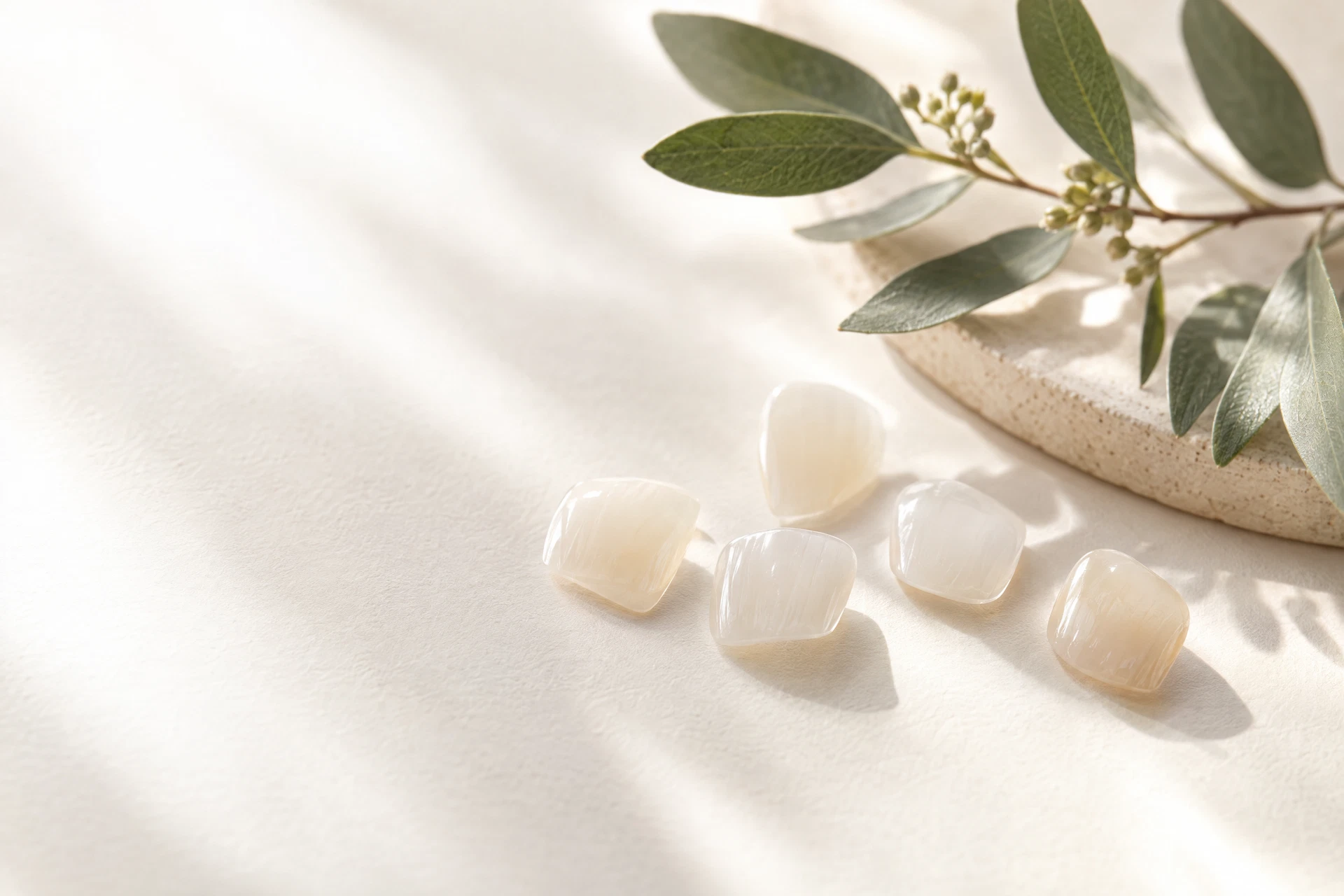
A porcelain veneer is a thin facing bonded to the front of a tooth. Its final appearance is not determined by colour alone: the ceramic, its thickness and translucency, the tooth beneath it, and the designed shape and surface all affect how it reflects and transmits light. For a London patient considering an elective treatment, the useful question is not ‘Which is the best veneer?’ but which conservative option can meet their aims while preserving tooth tissue and allowing a realistic match to the teeth that will remain visible.
What to keep in view
- A natural veneer is an optical match, not merely a light shade: value, chroma, hue, translucency, internal character and surface texture all contribute.
- Ceramic type and thickness can alter translucency and colour perception; the underlying tooth and cement are therefore part of the final colour system.
- A single-tooth match is especially exacting. A close match should be the aim, but a perfect all-lighting match cannot be promised.
- Shape should be planned against the existing smile, tooth proportions, incisal edges and patient preference—not a formulaic ‘Hollywood smile’ template. A mock-up can be a valuable discussion tool when clinically appropriate.
- Veneer treatment can be irreversible. NHS guidance says some veneers involve drilling the front of the tooth, and NHS notes veneers are generally private unless there is clinical need; consent should cover alternatives, benefits, common consequences and risks.
- Use a registered dental professional for assessment and treatment. The GDC states that only registered dental professionals can legally provide dental treatments in the UK.
Five patient questions
Clear answers, with the context that matters.
01What ceramic is used for a natural-looking porcelain veneer?+
‘Porcelain’ is an everyday umbrella term rather than one material. Ceramic veneers may be made from feldspathic or other glass ceramics (including lithium disilicate), or zirconia-based ceramics. They do not have identical optical behaviour: in a laboratory comparison of 0.5–1.0 mm veneers, both material and thickness affected translucency, and the zirconia specimens were less translucent than lithium disilicate specimens. This supports a tailored material choice rather than a universal ‘best’ ceramic.
For your own situation: Material choice also depends on the tooth’s condition and colour, the available space, bite forces and the amount of tooth preparation required. Only a dentist’s examination and records can say whether a particular material and design is appropriate for you.
02Can a veneer be matched exactly to my other teeth?+
A close match is a careful optical exercise, not simply choosing ‘white’. Clinicians assess shade in terms of value (lightness), chroma and hue, and map characteristics in nearby teeth such as translucency, white spots, incisal halo and internal detail. They may use shade guides and/or instruments, photographs and laboratory communication. Even with careful planning, an identical appearance in every type of lighting cannot be guaranteed because natural teeth and ceramics interact with light differently.
For your own situation: The difficulty varies greatly between a single front tooth and a group of teeth, and with the colour and texture of the adjacent teeth. An examination and shade assessment are essential before anyone can advise how close a match is realistically achievable in your case.
03Why does translucency matter, and can a dark tooth show through?+
Natural enamel is not uniformly opaque. A ceramic with more translucency can help create depth, but it can also allow more influence from the underlying tooth and the bonding cement. Ceramic thickness matters too: the cited laboratory study found translucency changed with thickness for both tested materials. Where a tooth is markedly discoloured, the clinician has to balance masking it against retaining a lifelike, non-flat appearance; this is why a shade cannot be selected in isolation from the tooth underneath.
For your own situation: This evidence includes laboratory testing and cannot predict the final appearance of your own tooth. The cause and degree of discolouration, remaining enamel, planned thickness and cement system must be assessed clinically before a dentist recommends an approach.
04How are shape and surface texture designed so veneers do not look generic?+
Natural-looking design is more than symmetry or a very smooth, bright surface. Planning can consider the smile midline, incisal-edge position, tooth proportions and the relationship of each tooth to its neighbours. Fine surface texture and character, plus optical details such as translucency and incisal effects, change how light is reflected. Useful planning records include photographs and a discussion of the degree of character versus uniformity you prefer; a proposed shape may also be previewed with a diagnostic mock-up or temporary trial where clinically suitable.
For your own situation: There is no single face shape, proportion or ‘ideal smile’ that suits everyone, and a digital image is not a guarantee of the final clinical result. Your dentist needs to assess your teeth, gums, bite and expectations in person before advising on any design or preview.
05Should I whiten my teeth before choosing a veneer shade, and what should I ask about tooth preparation?+
Discuss the sequence before a final shade is fixed. NHS guidance states that whitening lightens natural teeth only; it does not lighten crowns, dentures or implants. This means a dentist should advise on the timing of any whitening and shade selection if nearby natural teeth are to remain visible. Also ask exactly how much enamel may need to be removed: the NHS notes that some veneers require a little drilling of the front of the tooth, although not all do. Consider and document alternatives, benefits, limitations and longer-term maintenance before consenting.
For your own situation: Whitening is not suitable for everyone, and whether it, bonding, orthodontics, no treatment, or a veneer is the most conservative option depends on your oral health and diagnosis. Personal advice requires an examination; do not start whitening or commit to irreversible preparation on the basis of an online shade plan.
Clinical & regulatory sources
Explore the source material.
These sources informed this guide. They support general education and do not replace an examination or personalised advice.
Take this guide into a consultation and ask how the information applies to your teeth, gums, bite and goals.
Open the consultation guide ↗